
Contents
Overview
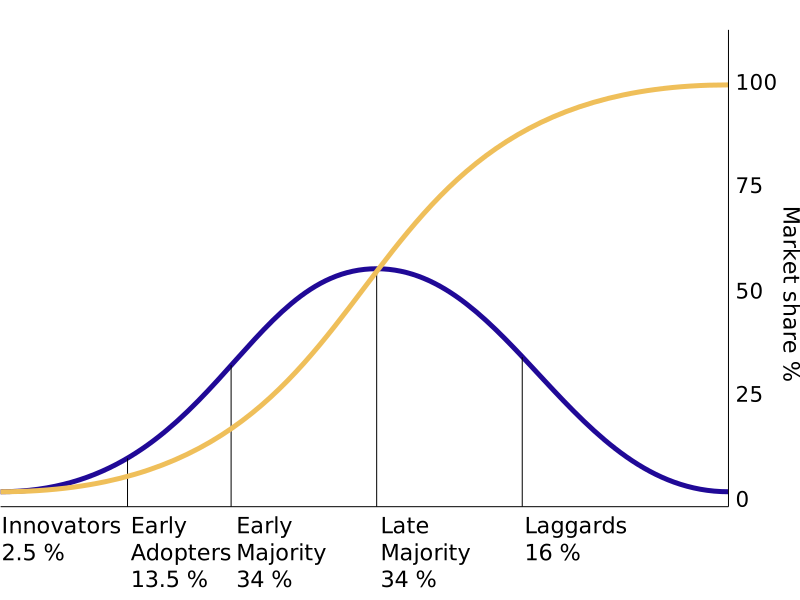
The early majority is characterized by a more cautious approach than innovators and early adopters, waiting for evidence of an innovation's effectiveness before adopting it. With a focus on practicality and reliability, this segment seeks to minimize risk while maximizing benefits. Companies like Apple and Google have successfully targeted the early majority with their innovative products and services. The adoption of electric vehicles by the early majority has been driven by their increasing awareness of the environmental benefits and the improvement in technology.
🎯 Introduction to Early Majority
The early majority waits for evidence of an innovation's effectiveness before adopting it. The early majority is characterized by a more cautious approach than innovators and early adopters. For example, the adoption of electric vehicles by the early majority has been driven by their increasing awareness of the environmental benefits and the improvement in technology.
📊 Characteristics of Early Majority
The early majority's focus on practicality and reliability drives their decision-making, as they seek to minimize risk while maximizing benefits. Companies like Tesla have successfully leveraged this aspect of the early majority by providing practical and reliable electric vehicles that meet their needs.
📈 Role in Innovation Adoption
The early majority's adoption is often driven by a desire to improve their lives, increase efficiency, or enhance their social status. For instance, the adoption of smart home devices by the early majority has been driven by their desire to increase convenience and efficiency in their daily lives.
📊 Case Studies and Examples
The early majority's feedback and recommendations play a significant role in shaping the innovation's future development and refinement. Companies like Amazon have successfully leveraged the early majority's feedback to improve their products and services, leading to increased customer satisfaction and loyalty.
🤝 Strategies for Engaging Early Majority
The early majority has significant cultural and social implications. Their adoption of innovations can lead to changes in social norms, values, and behaviors. The early majority's influence can extend beyond their immediate social networks, as their adoption of innovations can create a ripple effect that inspires others to follow suit. The early majority's adoption of renewable energy sources has been driven by their increasing awareness of the environmental benefits and the improvement in technology.
📊 Metrics for Measuring Success
To engage the early majority, innovators and organizations must develop strategies that address their unique needs and concerns. This may involve providing evidence of an innovation's effectiveness, offering practical solutions to real-world problems, and emphasizing the benefits of adoption. Companies like Patagonia have successfully engaged the early majority by providing high-quality, environmentally-friendly products that meet their needs and values.
📚 Future Research Directions
Measuring the success of early majority engagement requires a range of metrics, including adoption rates, customer satisfaction, and retention rates. Companies like Netflix have successfully used data analytics to improve their products and services, leading to increased customer satisfaction and loyalty.
Section 10
The early majority is closely related to other concepts and theories, including social learning theory and the technology acceptance model. These frameworks provide a foundation for understanding the complex factors that influence the early majority's adoption decisions and behaviors.
Key Facts
- Category
- resources
- Type
- concept